Over the last five years, labels and artists have poured time and money into social media, betting on a simple chain: content drives virality, virality drives streams, streams drive fans, and fans drive careers. The theory is seductive. The problem is that, in practice, it jams at the very first link, and it is the artist who pays.
The equation that breaks
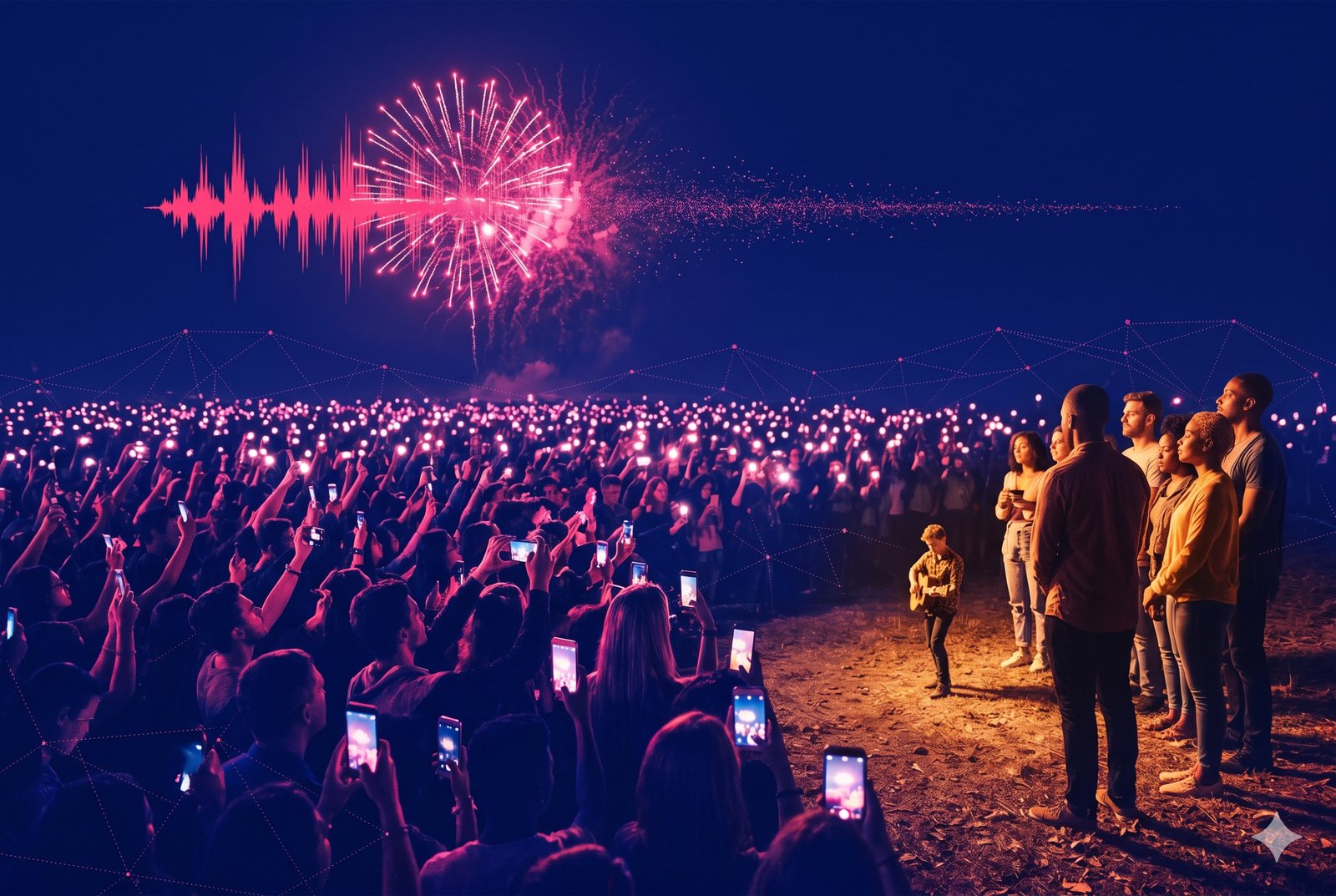
In September 2025, MIDiA Research published All eyes, no ears, a study of 10,000 consumers across several countries. The picture is uncomfortable: almost half of people (48%) did not stream any music they heard on social in the last month. And although 87% hear music on social, 58% say they had already heard that music somewhere else first. In other words: social media is not where discovery begins; it is where it echoes.
Fewer than a third of those who discover a song on social become fans. All that motion that looks like success (the views, the audios used, the comments) most of the time does not cross over to the other side. As the old advertising line goes: "half the money I spend on advertising is wasted; the trouble is I don't know which half."
The TikTok paradox
TikTok is the most revealing case. When someone discovers an artist there, 35% go on to follow them on the platform, but only 23% listen to more of their music. And among those who followed, just 26% actually listened to more, versus 45% of those who followed the artist on other social platforms. The TikTok follower converts worse than it seems: people are satisfied with the content inside the app and feel no need to migrate to streaming. The more an artist posts, the less their followers feel the need to listen off-platform.
There is a detail that should alarm anyone betting everything on the youngest audience: 16-to-24-year-olds are less likely than 25-to-34-year-olds to take almost every step of the path, including listening to more of an artist after discovering them. The industry targets that group on TikTok as if it were a guaranteed future, but in doing so it speaks to precisely the group that converts attention into listening the least.
Rented attention
Why does this happen? Because the platform's incentive is not yours. TikTok and Instagram win by keeping the user scrolling the feed, not by sending them off to a streaming service. MIDiA sums it up in one sharp line: social media captures value more than it drives it. The attention you earn there is real, but it is rented: it lives inside the app, under the app's rules, and disappears when the algorithm decides.
It is exactly the point we keep making. A viral hit is a spike of rented attention. It can inflate a number for a week and still leave you nothing of your own: not the name, not the contact, not the history of who got excited. When the trend passes, the artist does not keep the relationship; they keep the nostalgia for the chart going up. Reach is not fandom: you can be heard by millions and remembered by no one.
What to do about it
The good news is that the study also points to the way out. MIDiA's advice to artists is blunt: "put the artist on a platform, not in a platform." Instead of chasing the widest possible reach, aim for the right fans, and make the first impression count. When discovery begins with the full song and the artist's story, every new touch on social sends people back to listen more. When it begins with a loose snippet, what remains is the urge to revisit the snippet, not to know the artist.
And the step that closes the loop is owning the relationship. Use streaming, live and social itself as top-of-funnel, and channel all of it into a base you own: email, SMS and, in Brazil, above all WhatsApp. No one can shut that base down with an algorithm change. With it, you are the one talking directly to who matters, when it matters, without paying a toll or praying to the feed.
A note of honesty: All eyes, no ears is a global study and does not include Brazil: the closest case is Mexico, where only 19% of those who discover on TikTok go on to listen to more of the artist. But the lesson matters even more here. Brazil is the country where the owned channel delivers most: WhatsApp is nearly universal and opens at rates no social network reaches. The ground for turning attention into relationship is fertile; the artist just has to plant in the right place.
Going viral is great. But a viral is a headline; a fan is an asset. One exists as long as the algorithm allows; the other is yours as long as you take care of it. The question every manager should ask after the next viral is not "how many views did it get?", it is "how many of these people can I reach tomorrow, without asking anyone's permission?".