Sometime around 2017, three friends who had met at ECA-USP, the University of São Paulo's school of communications and arts, received a contract offer from a record label. It was Universal Music. They didn't even have a registered company.
What they did next is the most interesting detail in this story, and almost nobody notices it. Instead of letting the artist sign on his own, they set up a company. "We needed a company registration to sign, or Jão would have signed alone," one of the partners told Forbes in May 2022. "That's when we started thinking like a business."
Years later, the same company, U.F.O, did it again. It brought show production in-house because the market wasn't delivering what they wanted: "We want to deliver a spectacle for the audience, we invest a lot in it, and we weren't finding that space with show buyers." By 2022 there were already 25 people working on the shows, and the company was bringing in between R$3 million and R$4 million a month.
Twice, this team looked at a layer of the career, saw that it was in someone else's hands, and brought it home.
That alone is why it's worth asking about the third.
First, the scale
The SuperTurnê tour took 328,000 people to 16 shows in 14 cities, between January 2024 and January 2025. By the 11th show it was already the best result of his career, at R$49.3 million, against roughly R$30 million for the previous tour. The September 25, 2026 show, at the same São Paulo stadium, sold out in four hours, with more than 50,000 tickets: it is the fourth time he has filled that venue.
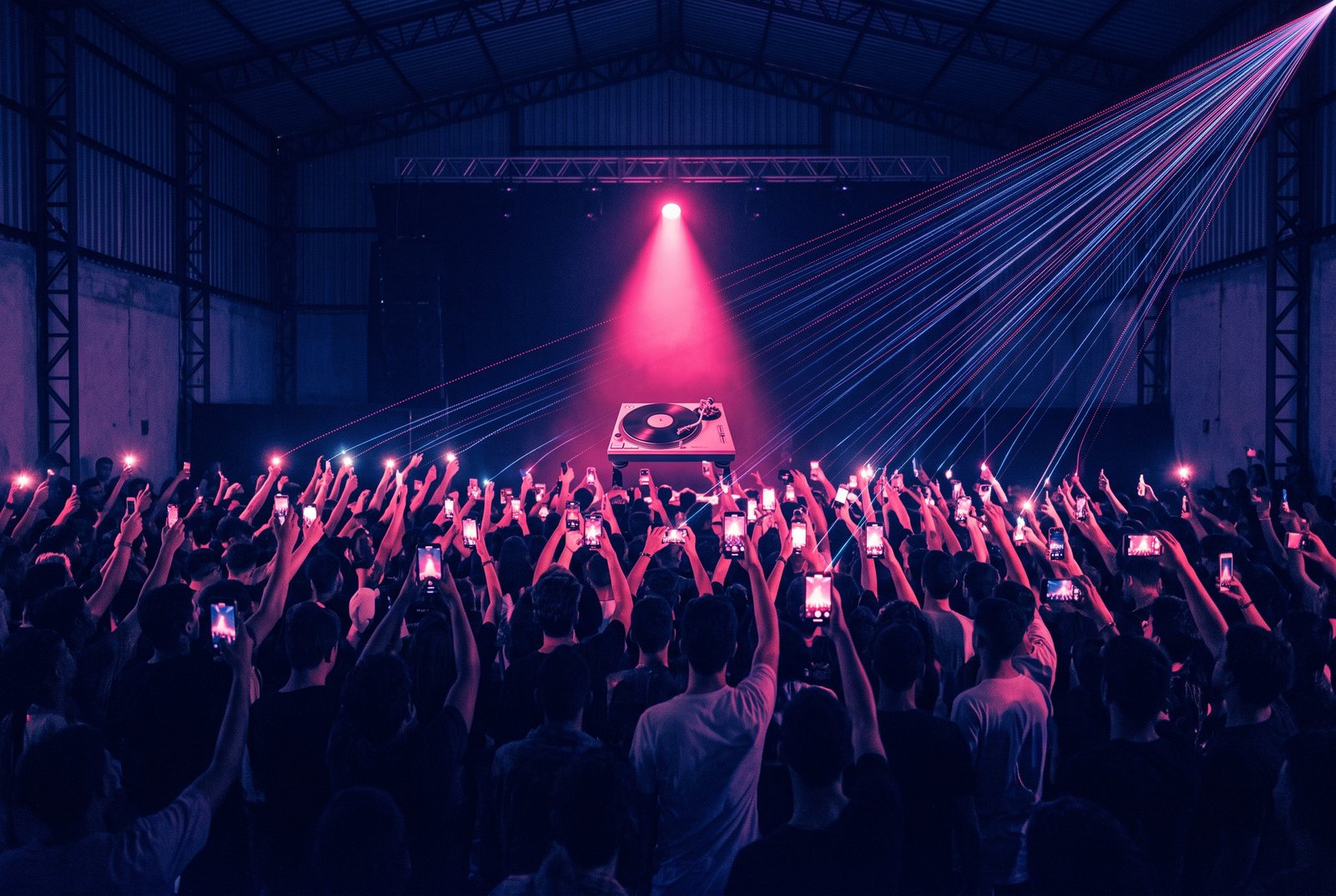
And there is a number more striking than all of these. In August 2023, twelve thousand people went to São Paulo's Ginásio do Ibirapuera arena just to listen to an album, one day before its release. Tickets ran out in under five minutes. In July 2026 the scene repeated itself at the Vale do Anhangabaú, in downtown São Paulo, with eleven thousand people and free admission. Coverage recorded one fan who arrived at five in the morning and another who came from Rio de Janeiro just for that, and was already planning to come back in September for the show.
Nobody does that by accident. That is the operational definition of a superfan, happening in broad daylight, twice, three years apart.
The portrait released in August
On August 20, the Brazilian outlet POPline published a profile of Jão's listeners, with Spotify data: 2.8 million monthly listeners, 72.7% Gen Z, 63.2% women, and São Paulo accounting for 17.8% of the audience, followed by Rio, Belo Horizonte and Curitiba.
It's a beautiful, specific portrait. And it is about that portrait that this piece wants to ask something: who owns it?
What can't be known from here
This is the part that has to be spelled out in full, because without it the rest becomes impolite guesswork.
I don't know what Jão's team has built. I don't know his contracts with the label, with the show promoter, with the ticketing company, with the brand. I don't know what percentage he receives on merch, or whether that contract gives him any view into the buyer database. It may well be that, today, there is a complete infrastructure of direct relationship with fans that simply doesn't show from the outside.
What can be observed is something else, more modest: who operates each interface. That is public. What the contracts say about data is not. And the question lives precisely in the gap between those two things.
Where each relationship happens
The audience profile published in August came from Spotify. Ticket sales for the SuperTurnê were operated by Eventim, with production by 30e in partnership with U.F.O itself. The free tickets for the listening session, the ones for the eleven thousand people who voluntarily identified themselves to hear an album before everyone else, were also distributed by Eventim. The tour film was screened in cinemas and went to YouTube.
And the merch has a detail worth visiting before you read on.
Part of Jão's products are sold at umusicstore.com. The site's footer says who operates it: Universal Music Brasil. There are sixteen items of his there, from socks to a double vinyl. And the store offers 5% off the first purchase in exchange for signing up with an email address, with a preference center where customers tick their favorite music genres.
Now put that next to a paragraph from Universal Music Group's 2025 annual report, on page 35. The company describes what it calls, in its own quotation marks, its "'owned' audience," and defines it as "the segment of customers registered to receive marketing materials from our owned and operated websites." According to the same report, that base "has grown to over 200 million fans," and the company's direct-to-consumer business is driven, among other things, by what it calls its "increasingly sophisticated customer data capabilities."
I'm not saying anyone did anything wrong. Quite the opposite: this is the industry's standard design, it is written in an audited report, and the label tells its shareholders about it precisely because it is a valuable asset. A major that didn't do this would be leaving money on the table.
The question is a different one, and it's an honest one: the fan who bought the vinyl, ticked the discount box and started receiving emails joined whose database? And does the artist's contract give him any view inside it? I don't know. Nobody on the outside does.
And then he hands over the key himself
In November 2024, in Harper's Bazaar, Jão talked about what sustains his career. The line became the headline:
My greatest asset is my genuine connection with the fans.
In the same interview, he said two more things. The first: "Showing my day-to-day doesn't come naturally to me. I go there, do my show and go back home." The second: "I think about disappearing a little at some point. Spending some time without outside interference."
Read the three together, because that's where it gets interesting.
An artist whose greatest asset is his connection with fans. Who doesn't like to expose his routine. Who thinks about disappearing for a while.
Those three things are only compatible with each other if the connection doesn't depend on a feed. An algorithmic timeline demands constant presence and punishes absence: whoever stops posting drops out of reach. An owned channel is the only one that gets through a year of silence and is still there when the artist comes back.
So: when he decides to disappear for a while, and one day comes back, how many of these people can he talk to directly?
While this piece was being written, he came back
The question above was written in August, as a hypothesis. Before the piece was finished, it got an answer.
Spotify organized "Jão: Cada Lembrança Nos Trouxe Até Aqui" ("Every memory brought us here"), an in-person performance that, according to coverage by the Brazilian trade outlet Mundo da Música published on September 8, marked the singer's return to the stage after more than a year away. The audience was hand-picked, and the selection criterion is what matters here.
The platform analyzed its own listening data to find the Premium subscribers who listen to Jão the most. The calculation took in play frequency, the history of coming back to the catalog, and following the different eras of his career. Those people received the invitation. The performance was recorded, and Spotify says the video will be released later, on the platform itself, together with exclusive content and behind-the-scenes material.
It's worth noticing what this selection measures. A ticket or a vinyl records who bought something once. Accumulated listening records who kept returning to the work over the years, across different phases of the artist. It is a much finer measure of fandom, and much harder to rebuild from the outside.
Ellen Rocha, Spotify's marketing lead in Brazil, described the logic this way: "The idea is to create a journey that starts in a very personal way and gains scale." And she added a line that could open this piece: "Streams are an important part of this story, but thinking about fandom is much more complex." Carolina Alzuguir, Spotify's head of music in Brazil, completed the thought: "great career moments aren't built by artists alone. Fans are part of it too."
It is a well-designed activation, and everyone wins from it. The most loyal fans got access to a rare moment, the artist came back to the stage in front of the people who follow him most closely, and the video is still going to circulate.
It also answers, in practice, the question the previous section ended with. After more than a year away from the stage, the people who listen to Jão the most were found, one by one, and brought close. The one who ran that search was the platform, with its own data.
The coverage doesn't say whether the artist's team took part in the selection, received the guest list, or whether the label negotiated any access. Maybe so. As with everything else in this piece, you can see who ran the activation, and what the contract says stays out of reach for anyone looking from the outside.
Doritos, Samsung and the difference between reach and relationship
At the 2023 listening session, Doritos handed out more than ten thousand bags of chips and dressed the arena in red, with the brand's triangle on stage. Twelve thousand superfans in one place, and the coverage of the activation mentions no data capture at all.
Doritos did what the Brazilian music sponsorship market usually does, and there is national research showing it: freebies, branded cups and lounges have become table stakes, the overwhelming majority of brand actions in music are one-off events or seasonal presence, and only one in five is designed as a long-term platform.
Since October 2024, Jão has been a Samsung ambassador, part of Team Galaxy. And here comes a hypothesis, which I raise without knowing the terms of the agreement.
His audience is 72.7% Gen Z, mostly women, concentrated in state capitals, and demonstrably willing to cross the country for him. That is exactly the profile a technology brand spends a lot of money to reach through paid media. And there is Brazilian data showing that this audience converts differently: people who go to three or more shows a year have bought or tried a product on an artist's recommendation in 30.9% of cases, against 14% for the general average, and belonging to a fan club raises the chance of choosing the sponsoring brand by 65%.
So the question: is a partnership like this buying reach or buying relationship? They are different things, with different prices and different results.
One word of caution, and it is not a footnote: relationship doesn't mean handing a fan list to a sponsor. Brazil's data protection law (LGPD) doesn't allow it, and it's not what I'm suggesting. The design that works is a different one: the fan consents to hear from the artist, the artist is the controller of that data, and the brand buys access to a permissioned audience, with an attributable campaign, without ever receiving the list. It is more work and far more valuable, because it can be measured.
The third time
Back to the beginning.
Around 2017, this team created a company so the artist wouldn't sign a contract alone. A few years later it brought show production in-house because no show buyer delivered the spectacle they wanted. Two layers that were in third-party hands and became theirs, by conscious decision, documented in interviews.
The third layer is the relationship with the fans. And I don't know whether it has happened yet.
Spotify's activation showed that it is possible with individual precision: Jão's most loyal fans can be found, one by one, from data. The open question is which system that list lives in.
Maybe it has happened. Maybe there is, today, an owned database, a WhatsApp list segmented by city, a contact cadence that runs across releases, tours and merch. If so, this whole piece is an unnecessary question, and I'll be glad to be wrong.
But if it hasn't happened yet, there are a few questions someone might want to ask in a meeting:
- Who owns the audience portrait released in August?
- The eleven thousand people who got free tickets to hear an album before everyone else: who got to know who they are?
- The tour went through fourteen cities. Can anyone say, today, how many superfans there are in Fortaleza?
- When the next album comes out on a Friday, how many of these people can be told without depending on an algorithm?
And above all: if he has already said that his greatest asset is his connection with the fans, where is that asset kept?