
The Numbers That Don't Tell the Whole Story
Brazil is the eighth largest recorded music market in the world. It grew 21.7% in 2024: the fastest growth among the top ten global markets (IFPI GMR 2025). It's the third largest premium streaming market on the planet, accounting for 5.7% of global premium streams (Luminate 2025).
These numbers appear in every industry report. They're a source of pride, optimism, and investment. But they only tell half the story.
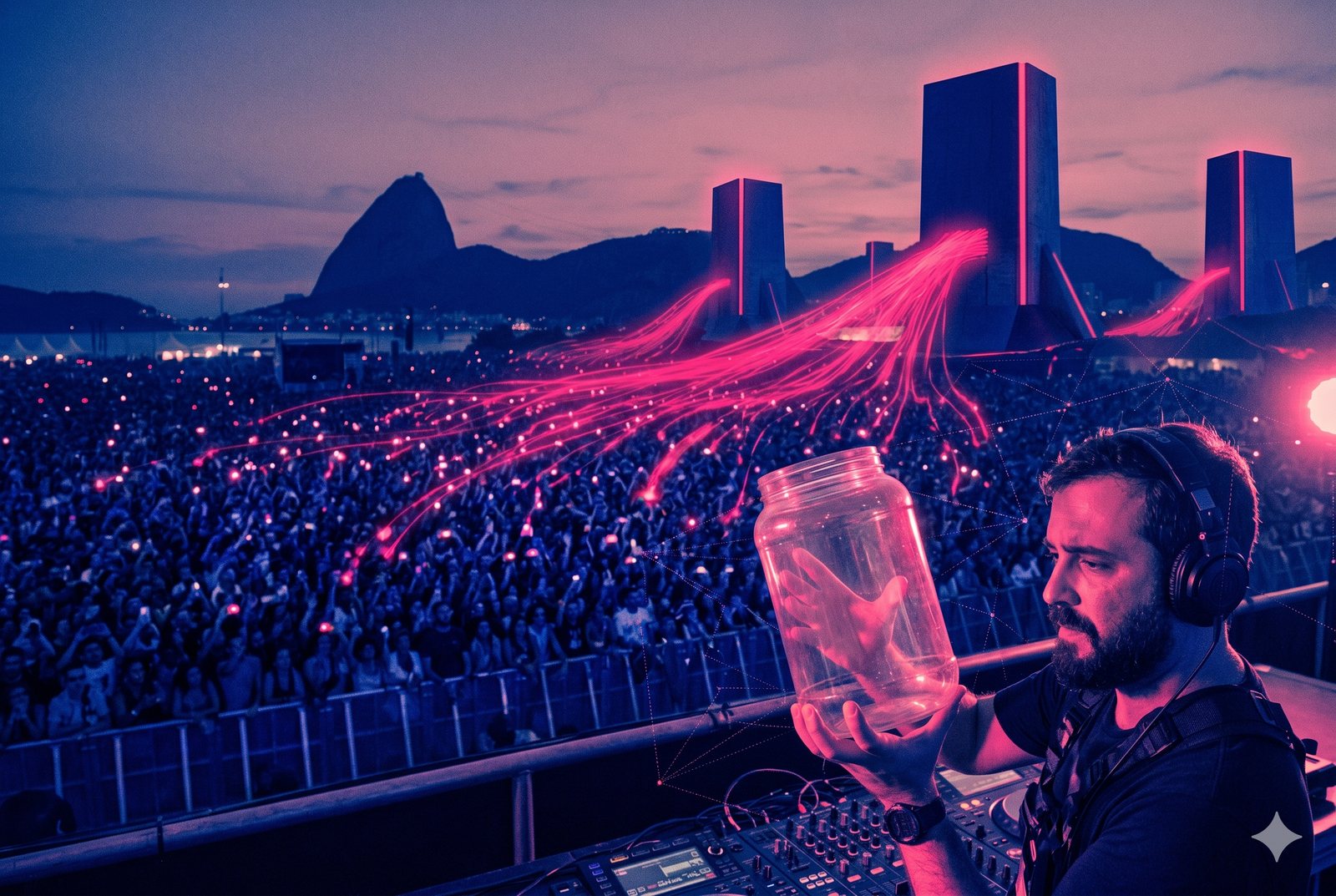
The other half is this: no other market of global scale combines this much growth with this little data ownership. Brazil is an audience giant that doesn't know who its audience is.
The Brazilian Paradox
75% of on-demand streams in Brazil are of local artists. This barely happens in any other developed market; it's a massive cultural singularity. It means Brazilian fans have an intense, loyal, and specific relationship with national music.
But what do Brazilian festivals and promoters do with that loyalty? In practice, they hand it over to foreign platforms.
Spotify knows who listens to Anitta, Ludmilla, Djonga. Instagram knows who engages with Lollapalooza's posts. YouTube knows who watches the Rock in Rio aftermovie. Google knows who searches for tickets six months before the festival.
The festivals know none of this. They have access to aggregated metrics (reach, impressions, views) but not to the data that matters: individual behavior, purchase intent, engagement history.
What the International Market Has Already Learned
Festivals like Coachella, Glastonbury, and Primavera Sound have built something over the years that Brazilian festivals still don't have: their own fan database.
It's not a state secret. It's CRM. It's opt-in email. It's WhatsApp with permission. It's a list of ticket buyers you can contact for the next edition without depending on any platform's algorithm.
The New York Times demonstrated it achieves 40x higher conversion when it has the user's contact data, compared to relying on organic or paid traffic. The same principle applies to festivals: whoever owns the list converts more, spends less on acquisition, and grows faster.
The Data Brazil Is Wasting
In 2024, 21% of Brazilians bought tickets for shows or festivals in the previous six months (Spotify/Kantar). Brazilians travel more than 500 miles to see a show, twice the global average (Live Nation). These are high-intensity, high-engagement, high-spending fans.
But this behavior isn't being captured. Every ticket purchase generates data that stays with Sympla or Ingresso.com. Every social engagement stays with Meta or TikTok. Every stream stays with Spotify. Every search stays with Google.
The festival has no unified access to any of it. When it starts selling tickets for the next edition, it starts from zero, even if 200,000 fans have already attended.
Why This Matters for Sponsors
There's another side of this problem that festivals rarely discuss: the impact on sponsorship revenue.
When a festival goes to market to sell sponsorship packages, what does it present? Attendance numbers. Social reach. Media impressions. These are visibility metrics: useful for branding, but increasingly unconvincing for brands that want efficiency and accountability.
Sophisticated brands want to know: who is this audience? What's the average income? What's the city concentration? What's the purchase behavior outside the festival?
Festivals with their own behavioral data sell sponsorships for more and to better partners. Festivals without that data compete on price alone, and lose to whoever has bigger digital reach.
The Window That's Opening
The market is changing. Growing AI adoption in CRM and analytics tools has dramatically reduced the cost and complexity of building proprietary data infrastructure. What once required an engineering team can now be configured with accessible tools and a clear process.
Additionally, Brazilian fans are increasingly accustomed to interacting directly with brands via WhatsApp, a channel that festivals still aren't using intelligently. Brazil has the highest WhatsApp Business adoption rate in the world. It's a direct, personal communication channel with nearly 98% open rates.
The festival that starts building its own fan database today will be three editions ahead of the competition by 2028.
What to Do Now
The first step isn't technological. It's strategic: deciding that your fans' data is a festival asset, not a byproduct that stays on third-party platforms.
After that comes the mapping: what data do you already have? Where is it? What can be consolidated? What needs to be collected with permission?
Brazil has the audience. It has the engagement. It has the cultural loyalty. What's missing is the structure to turn all of that into data you own, you control, and that works for you between editions.
If Brazil is the third largest streaming market in the world, why don't Brazilian festivals know who their fans are?