
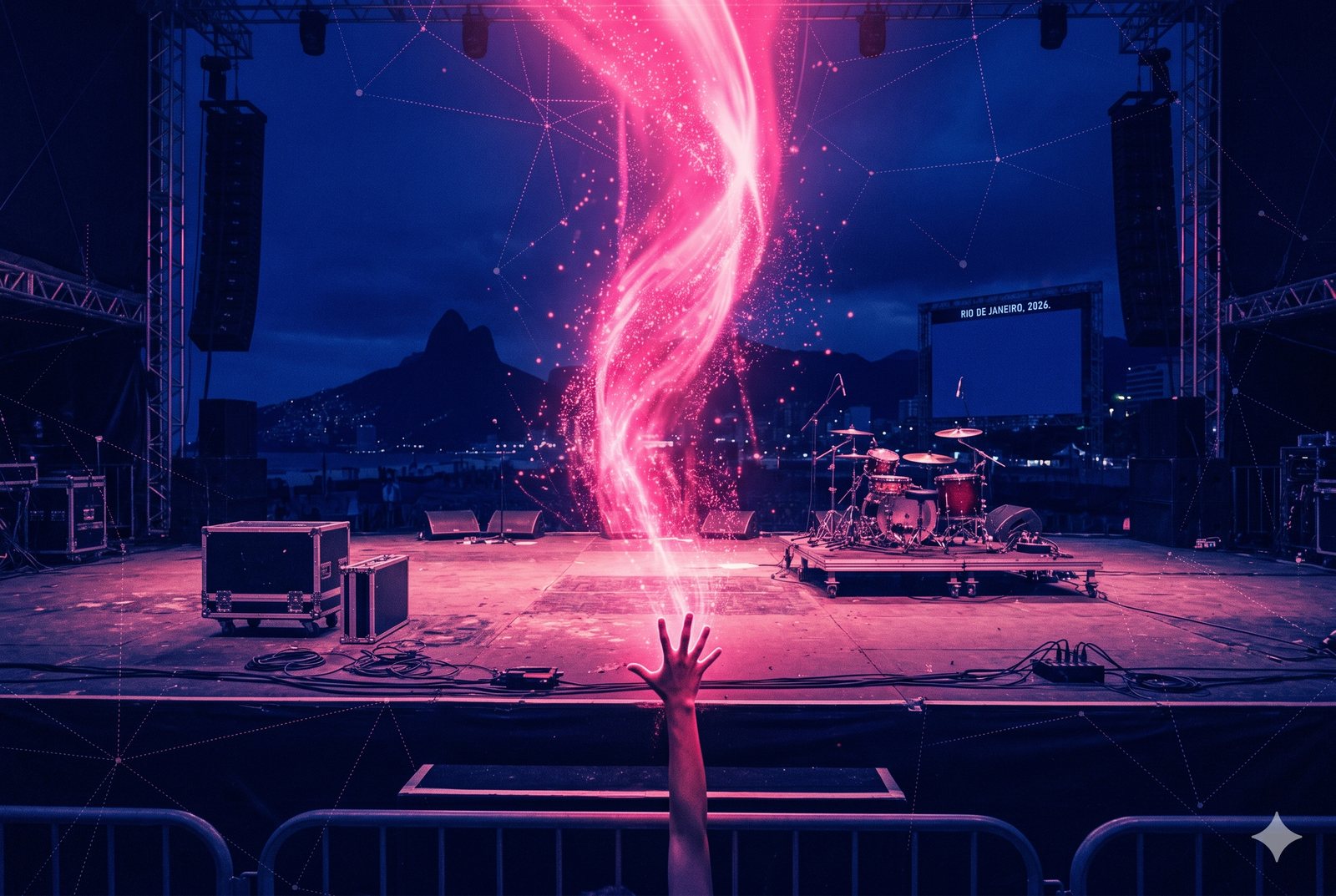
Shakira performed on Copacabana Beach in 2026, as part of the "Todo Mundo no Rio" series. The following week, her streams on Spotify and Deezer climbed more than 200%. Months earlier, on the same stage, Lady Gaga had produced a comparable result: a 60% spike in streams and 647,000 playlist additions in seven days. The pattern is consistent: the live moment creates a data event on the platforms.
The show ends. The artist leaves. And for a few days, tens or hundreds of thousands of people are in a state of elevated engagement: listening more, saving more, searching more, telling their friends. This is one of the most valuable moments in a fan's life. For most artist teams, it passes without any structured response.
What Happens During the Post-Show Window
For a few days after a major concert, thousands of fans are in a state of elevated engagement. They stream more, save more, share more. They discover deep cuts they'd never heard. They add songs to playlists. They look for the next show. This is the highest-intent window in the fan relationship, and for most artist teams, it passes without any structured response.
What rises alongside the streams is a signal. Who is listening? Who saved? Who added the entire album to a playlist at 11pm on a Sunday, two days after the show? These behaviors identify a specific type of fan: not the casual listener, not the curious newcomer. The committed fan. And that fan, in that specific window, is more open than at any other moment to deepening their relationship with the artist.
Who Keeps the Data
Spotify records exactly who listened. It knows which fans were already dedicated followers and which ones discovered the artist that weekend. Instagram captured who engaged, who shared, who tagged their friends. The platforms have the data from both Shakira's 200% spike and Lady Gaga's 647,000 playlist adds. What the artist teams have is the news headline.
Sympla has the name, taxpayer ID, and email address of everyone who bought a ticket. Ticketmaster has the purchase history. Instagram has the engagement history. Spotify has the listening behavior before, during, and after the show. Each of these platforms holds a fragment of the fan. None of them shares those fragments with the artist in a structured way. And the artist, without access to any of those fragments, starts the next cycle from exactly the same point.
The Signal That Spotify Reserved Reveals
In May 2026, Spotify announced Reserved, a feature that uses listening history, saving and sharing behavior, and fan tenure to identify an artist's most dedicated Premium subscribers and offer them priority ticket access. Charlie Hellman, VP of Marketplace, was direct: "It's not as simple as total stream volume; we can see your tenure as a fan."
The announcement reveals something important: Spotify didn't build this product last month. It was built on years of accumulated behavioral data: the same data generated every time a Shakira or Lady Gaga show sends streams surging. The platform has been sitting on the asset. It's now monetizing it.
Spotify Reserved is, in essence, an operational proof of concept: fan behavioral data has direct, measurable commercial value. The company with 293 million Premium subscribers just struck a multi-year deal with Live Nation to monetize precisely the data that the artist's team doesn't have access to. The company's stock rose 13% on the day of the announcement.
The Infrastructure Question
The 200% spike after Copacabana was a signal. So were the 647,000 playlist adds after Lady Gaga. The 216,000 playlists created on Spotify around Rock in Rio 2024. The 397,000 from Lollapalooza. Each of these events told any attentive observer: these fans are active, they're engaged, and they're reachable, right now.
According to Laylo, owned drop pages convert 7x better than standard landing pages. Seventy percent of fan list growth happens during tour cycles. This means the post-show window isn't just a moment to celebrate: it's the moment when the fan is most willing to join the list, to become reachable, to step out of the platform ecosystem and into direct contact.
The question isn't whether the signal exists. The question is whether the team has the infrastructure to receive it. When streams rise 200% after Copacabana, the artist with a city-segmented WhatsApp list, an active capture page, and a ready activation sequence turns that spike into a relationship. The artist without one watches the number go up, then come back down, and starts the next cycle from the same place.
The next time your artist creates a moment like this (a show, a release, a viral spike) will the team have the means to capture what happens next?