
The Problem Nobody Wants to Admit
Your festival sold out in hours. Press covered it, social media exploded, the post-show energy was overwhelming. Three months later, you're planning the next edition. And you realize you're standing at the exact same starting point as twelve months ago.
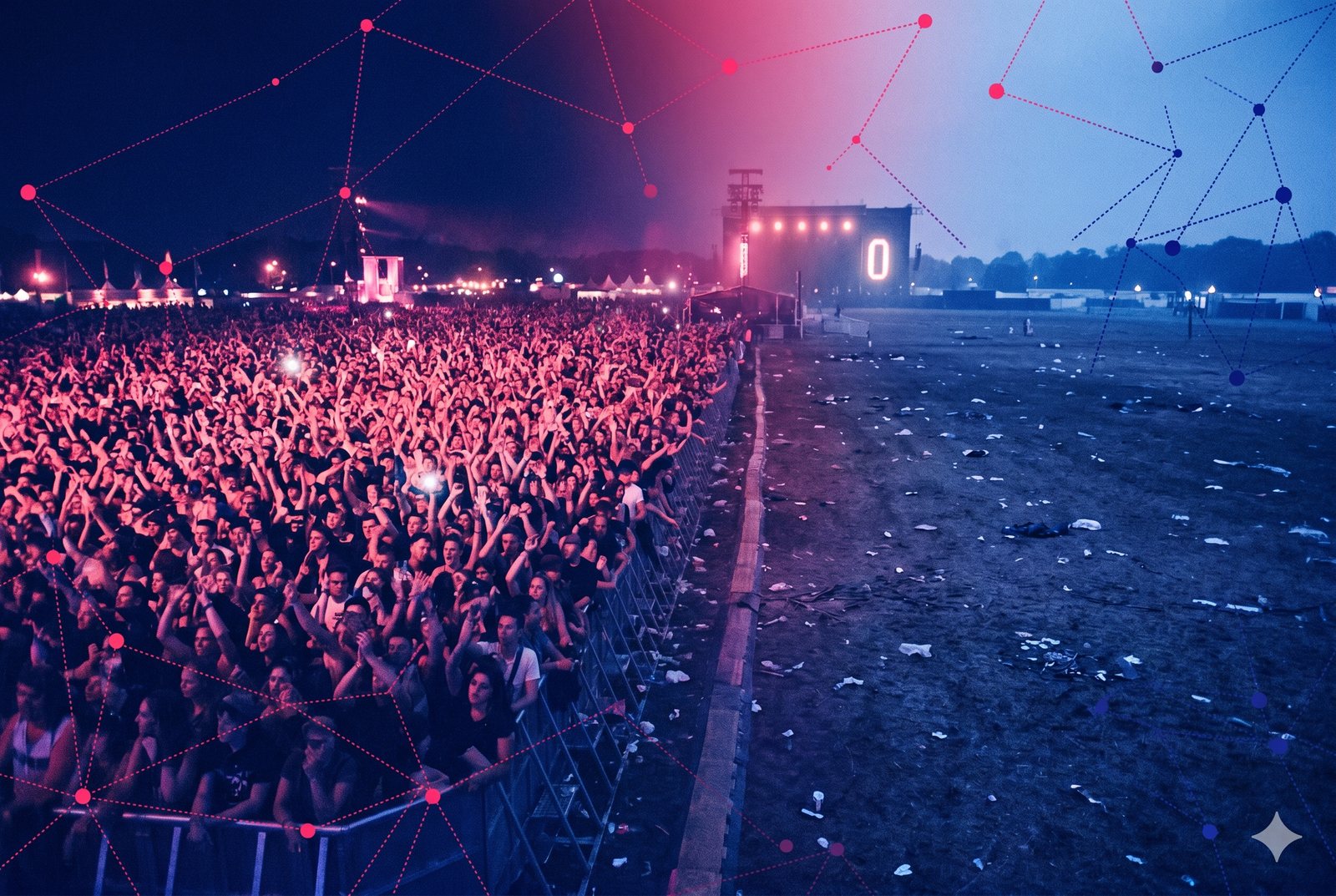
You don't know who bought tickets. You know how many, you know the volume by batch, maybe you have a city breakdown if the ticketing platform lets you export. But you don't know who these people are. You can't reach them directly. You can't segment them by behavior. You can't tell who attended for the first time and who was back for the tenth. This is the central problem of Brazilian festivals: the relationship with the fan ends when the gates close.
What Stays and What Gets Lost
When a festival ends, what remains? The revenue from the event. The photos and videos. The reputation built over years. A follower count on Instagram that grows a little in the days after and then plateaus.
What gets lost is the data. The purchase behavior of each fan. The history of who bought early, who bought in the last batch, who came in groups, who traveled from another city. The engagement with every communication sent before the event. The list of people who clicked the ticket link but never completed the purchase.
That data doesn't disappear: it was never collected. Or it was collected by third parties (the ticketing platform, Instagram, Spotify) and stayed there, inaccessible or fragmented, disconnected from everything else you have.
The Concrete Case
Lollapalooza Brasil 2024 generated 397,000 playlists on Spotify around the festival. Rock in Rio 2024 generated 216,000. These are signals of intent, engagement, and cultural identity that the festivals themselves can't directly access.
Who created those playlists? Where were they from? Which artists were searched most before the festival? Which ones generated the most streams afterward? These questions have answers, but the answers live inside Spotify. The festival has the event. Spotify has the data.
This pattern repeats across every platform. Instagram knows who engaged with your posts but never bought a ticket. Sympla knows who reached checkout and abandoned. Google Analytics knows which pages converted best. But none of this data talks to the rest; and the festival has no place where it all connects.
The Economics of the Returning Fan
There's a massive difference between a fan who attended your festival once and one who's been three times. The returning fan buys tickets earlier (reducing acquisition cost per batch), spends more on experiences inside the event (premium areas, food, merch), refers friends more frequently (organic acquisition), and is more tolerant of lineup changes and price increases.
Superfans, roughly 2% of an artist's listener base on Spotify, account for more than 50% of ticket sales. They spend an average of $25+ per month per artist on merch and live events, and they're 9 times more likely to recommend a show to someone.
The problem is you don't know who they are. They're all in the same "ticket buyer" list: with no distinction by behavior, frequency, or lifetime value potential.
What Changes When You Have the Data
When you start building your own fan database, with permission, with value for the fan, with integration across sources, the ticket sales process changes completely.
You know which fans attended the last three editions. You notify these people before any public announcement. They buy first, at the cheapest batch, and help create the FOMO that accelerates subsequent batches.
You know which fans are in São Paulo, Belo Horizonte, Porto Alegre. You can segment paid media campaigns by city with a Custom Audience built from real behavioral data, not declared interest in Meta Ads Manager.
You know who's never attended but always engages. That person gets a different offer, a different message, a different purchase window.
This isn't future technology. It's what consumer brands have been doing since 2015. The Brazilian music market is arriving late, but it's arriving.
Where to Start
There's no magic solution. Building a fan database takes time and requires decisions about tools, processes, and communication. But there's a clear starting point: map what you already have.
Every festival already has data, scattered across silos. Tickets on one platform, emails on a list, followers across social media, streams on Spotify. The first step is inventorying these sources, understanding what's accessible, what can be unified, and what's being wasted.
The next edition of your festival is already being planned. The question is: are you going to start from zero again, or are you going to use what you learned to start ahead? How many editions of your festival need to happen before you truly know who your fans are?